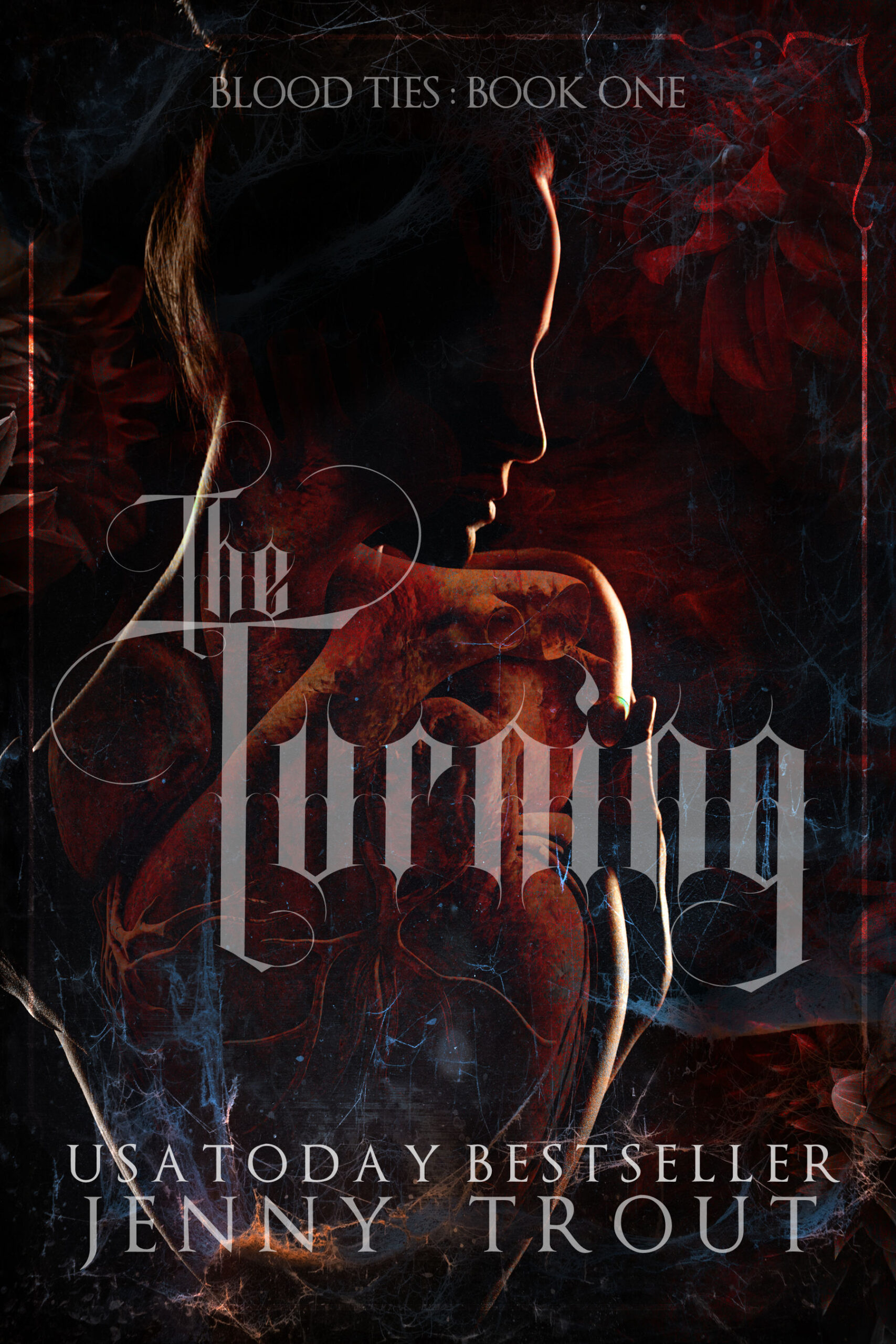
Friends, I know it has been a while. I’m way more active over on Patreon these days because, frankly, I gotta pay those bills, and time is tight. But The Turning is out in sixteen days (the day before my youngest kid’s high school graduation party… why did I schedule it like that?), so it’s now or never in terms of updates.
Rewriting The Turning has been wild. I got to see how much I’ve grown and changed as a writer, and how much I’ve grown as person. Namely, how much I grew past some harmful internal programming. That meant I needed to make substantial changes to story elements. I also made more changes, to do more of what I want. Because it’s my book.
If you read The Turning and you’re curious about what’s different, read on (cw: sexual assault, murder, torture, necrophilia, mutilation of corpses, as well as implied cannibalism of a deceased infant). If you’re going into it for the first time, or you want to be surprised, this would be a good place to stop in order to avoid spoilers. But first, we’ll pause for a quick ad break.
Universal Book Link • Amazon • Barnes & Noble
This post was brought to you by Jenny’s Ambitious Projects. Take on enormous, self-inflicted challenges with Jenny’s Ambitious Projects.
When I wrote The Turning twenty years ago, I thought it was just so incredibly, super dark. And other people thought that, too; part of the industry word-of-mouth that got the book its initial support was “can you believe Harlequin would publish that?” But times and standards have changed, especially with the popularity of Dark Romance. There seems to be a ’00s Urban Fantasy to Dark Romance pipeline out there, and I think the new version of The Turning will read as something that’s grown with that audience. I’ve increased the spicy content. The blood tie is more sexually intense. The sex scenes are more graphic. And the villain/love interest, Cyrus, is much darker and more violent.
Cyrus has always been a problem character for me. He’s also the one that readers gravitated to the most. My limitations as a young writer kept me from impressing upon readers that Carrie is only attracted to Cyrus because of the blood tie. He was a murderous pedophile who delighted in the pain of others. But people loved him so much, editorial insisted on a redemption angle in the later books. While I appreciated readers’ enthusiasm and I’m flattered that so many people felt strongly about what I’d created, I always felt a little weird about giving that guy a “he’s just traumatized and misunderstood” arc. I decided to shift the focus away from “he’s really into young teens” and onto “he’s really into dead bodies.”
Do I think that’s gross? Yes. Do I think there are still gonna be readers who find that kinda hot? Absolutely, I love them for it. Read what turns you on, baby.
The character who was changed the most, though, is Ziggy. I aged him him up a bit and gave him new motivation for seeking out Carrie at Cyrus’s house. Nathan no longer kicks Ziggy out for being gay; it embarrasses me that I thought homophobia was a perfectly okay trait in a love interest. My own internalized queerphobia was all over these books. Ziggy ends up in Cyrus’s house through circumstances that should have been the obvious explanation the first time I wrote the story.
The racism that I never challenged in myself in my twenties is also all over this series. There was one Black character, a servant named Clarence, who described himself as “coming with the house.” The character is a ghost, which is revealed, if memory serves, in the fourth book. You see, of course, where this is problematic on several levels. I swapped Clarence’s role with a new character, Clara. She’s a little more acerbic, and she’s much less of a “guide” character than Clarence was. She’s also white, removing the icky connotations of being “owned” by Cyrus.
Swapping Clarence for Clara created a new problem: he was the only non-white character in the book. And all of the major characters are some flavor of supernatural being, except one. Ziggy is the only major human character in The Turning. Ziggy is also one of the few characters in the overall series who (spoiler warning) gets a happy ending. Since I’d eliminated a Black character, I needed to add somebody back, and Ziggy felt like the perfect fit. Changing Ziggy’s race meant changing his lore and relationship to Nathan, so he’s now much more clearly Nathan’s adopted son, and, while Ziggy still sells his blood on the underground vampire market, he no longer supplies Nathan with his own blood.
I’m sure someone out there is going to criticize this change in particular as “diversity for diversity’s sake,” and I want to be clear that yes, that’s exactly what it was. And we’re talking about a single character, so let’s not pat me on the back for solving racism or anything.
You may be noticing a pattern wherein 20-something Jenny had all kinds of problematic ideas and attitudes swirling around her uneducated brain. That’s why, aside from the racist tropes, homophobic characters, and the dangerously unserious way I treated pedophilia, I also had to remove fatphobia from The Turning. Dahlia, a secondary antagonist, is described throughout the original book as being plump, wearing tight clothes, basically the stereotype of the sad fat girl who thinks she’s hot. Every description of her reflected onto Carrie as Not Like Other Girls energy. That’s not the kind of fat representation we need in media, and we don’t really need another evil fat character. Dahlia is still there, but the language around her body is different.
There are dozens of other, smaller details that chronic re-readers will notice, like technology references that have been updated or lines of dialogue delivered by different characters. I hope they’re fun for everyone to discover. I hope new readers are able to enjoy the book without having to think, “It was a different time.” And I hope that as I rewrite the sequel, Possession, I find more stuff that can be improve on, both editorially and personally.

The changes soudn really interesting! We all grow and learn as we go along.
Thank you so much for giving us those details! I have to admit I haven’t read this book before, so I was very curious what the differences were. Good on you for showing that growth as a person! We all (hopefully) go through it, but not many people would be brave enough to broadcast their past mistakes!
Waiting for the next Fablemere book!
Do you mind some more brutal picking apart of this book from a reader perspective? Maybe save this comment for when you’re in the mood for it (or you’re not obligated to read it, if you don’t think it will be helpful).
The racism and pedophilia are what made me put the book down. But also, I just didn’t find Carrie likable. She comes off as having no empathy whatsoever. She’s only nice to men she finds attractive (and frankly they’re mainly assholes, so that makes it feel even shallower). She doesn’t have a single kind thing to say about anyone she’s ever met prior to turning vampire. Maybe consider starting her out with some friends and family? I don’t understand why she’s so isolated. She lifts right out of her pre-vamp life, which is just weird. Surely the hardest and also most interesting aspect of turning vampire is navigating your existing relationships?
I kept waiting for the circumstances of her family’s deaths to be of some relevance to the story, or for her to reconnect with someone from the past. If she has family issues, maybe she could work on them instead of being isolated and resentful of people who died in unexplained circumstances? Or if she’s grieving someone, have her go through the stages? Send her to therapy?
She also keeps telling us that she’s smarter than everyone because she has a medical degree. I didn’t feel that she demonstrated that superior intelligence in the story. She mostly runs on vampire instinct and pick-me energy, let’s be real. She also doesn’t use her medical knowledge all that much, or at least not in a way that makes it essential to the story. She could have been an accountant, or a waitress, and it wouldn’t really have made much of a difference. If she’s not really a genius, I feel that she should either feel some imposter syndrome, or start out with an inflated ego and then have the story take her down a peg. It’s fine to write a strong female character who has humbling moments, you know?
On top of that, she’s also the prettiest girl in any room. I know that’s common for the romance genre (it’s either that or “she’s tv pretty but doesn’t know it”, which, barf), but I imagine you’d want to change that this time around? I mean, she’s in her 20s, pretty girls her age are a dime a dozen. Personally, I thought Dahlia sounded hotter than her. And more fun 🙂
Finally, I think it’s fine to explore fatphobia in the book, if that’s something you want to do. It’s certainly a major issue in the medical field.
Good luck with the rewrite! I hope you have fun with it.
Oh! I just remembered. SHE HAS NO SENSE OF HUMOR. What?? I don’t remember which situation it was, but I remember the potential for giggles, and holding up the book and saying out loud “Girl, you’re giving me nothing!”
Honestly, I would forgive her just about anything if she had a really great sense of humor! Come to think of it, I’m friends with a genius who does not have empathy. It’s a major social handicap that causes her a lot of anxiety. She’s also eccentric, creative and hilarious, and I love her. She hasn’t had an easy life. She also has the wackiest and most entertaining anecdotes of anyone I know. I’ve frequently told her “there should be a book about you”. So there you have it!